
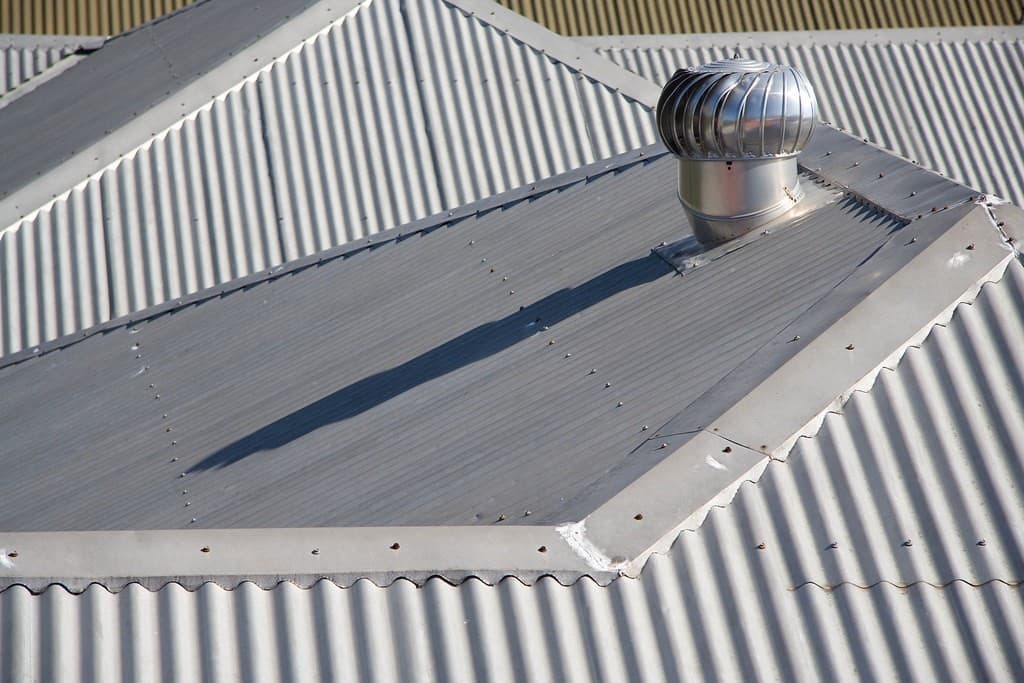
 Illustrative photo
600 mm Stainless Steel Roof Cyclones
600 mm stainless steel turbine ventilators that pull hot, stale air out of roofs without electricity. Supply and installation.
- Availability
- Availability on enquiry
- Sales unit
- cyclone
Request a quotation
Prices depend on specification, quantity and delivery location. Add this item to your quote basket, then send one request for everything you need.
About this product
A roof cyclone is a turbine ventilator mounted over an opening in the roof. Wind spins its curved vanes, creating low pressure above the opening that draws warm, stale and humid air out of the building, while rising warm air helps the flow. It needs no electricity and has no running cost.
We stock 600 mm (throat diameter) roof cyclones in stainless steel, which resists rust and weathering on exposed roofs. We can supply them on their own or install them for you, fitting the base to your roof profile and sealing it against rain.
Cyclones are used on factories, warehouses, workshops, poultry houses, schools, churches and homes. Because they rely on wind, they work best where there is a regular breeze; on still days they act as a passive vent. Tell us your building size, roof profile and the number of cyclones you need, and whether you want installation, and we will quote.
Also searched as: roof cyclone, cyclone vent, turbine ventilator, whirlybird, roof turbine vent, wind turbine ventilator, wind driven ventilator, roof extractor
Specifications
| Throat diameter | 600 mm |
|---|---|
| Material | Stainless steel |
| Power | Wind-driven (no electricity) |
Available options
| Option | Diameter / size | Availability |
|---|---|---|
| 600 mm stainless steel | 600 mm | Availability on enquiry |
600 mm Stainless Steel Roof Cyclones: common questions
What is a roof cyclone?
A roof cyclone, also called a turbine ventilator or whirlybird, is a wind-driven vent on the roof. Its spinning vanes draw hot, stale and humid air out of the building.
Do roof cyclones need electricity?
No. They are turned by the wind, helped by warm air rising inside the building, so there is no running cost.
Do roof cyclones work when there is no wind?
They spin best in a breeze. On still days they still act as an open passive vent that lets rising warm air escape.
What size and material are your roof cyclones?
We stock 600 mm (throat diameter) roof cyclones made of stainless steel.
Do you install roof cyclones?
Yes. We can supply cyclones only, or supply and install them, fitting the base to your roof profile and sealing it.
Why choose stainless steel cyclones?
Stainless steel is the most corrosion-resistant common cyclone material, so it suits exposed roofs, coastal areas and damp or fume-laden buildings.
How often should roof cyclones be checked?
For homes, once a year; on factories and warehouses, at least every six months. Check they spin freely and quietly, fixings are tight and the base seal is intact.
How many roof cyclones does my building need?
It depends on the building's volume, use and how much air change you want. Send us the roof area, building type and roof profile and we will advise.