
What a roof cyclone does
A roof cyclone is a turbine of curved vanes sitting on a short throat over an opening in the roof. When the wind turns the vanes, the spinning head creates low pressure above the opening, pulling warm, stale and humid air up and out of the building. At the same time, hot air naturally rises (the stack effect), so even a gentle breeze keeps air moving.
Because the wind does the work, cyclones need no electricity and have no running cost. Their limitation is that they depend on wind: on a completely still day they behave like an open passive vent.
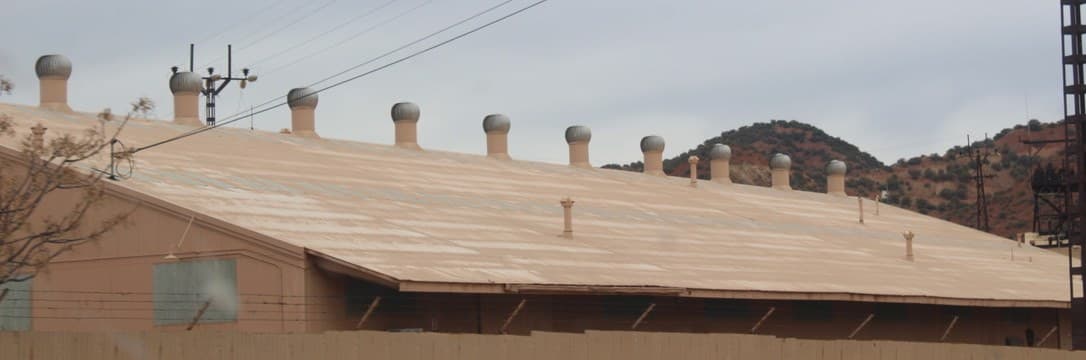
Where they help
- Factories and workshops with heat from machinery
- Warehouses and stores under hot metal roofs
- Poultry and livestock houses
- Schools, churches and halls
- Kitchens, bakeries and laundries with steam and heat
- Homes with hot, stuffy roof spaces
Choosing roof cyclones
Size. Cyclones are sized by their throat diameter; in Kenya 500 mm and 600 mm throats are common for commercial roofs. We stock 600 mm cyclones. Larger buildings usually need several cyclones rather than one big one.
Number and spacing. The number depends on the building's volume and use. Cyclones are usually placed high on the roof, near the ridge, and spread out evenly so the whole space is ventilated.
Material. Cyclones are made in aluminium, stainless steel or galvanised steel. Stainless steel, which we stock, resists rust and weathering on exposed roofs.
Base. The base must match the roof sheet profile and pitch, and be sealed properly to keep rain out.
How many cyclones, and where
For roof spaces, a widely used rule of thumb is about 1 unit of vent area for every 300 units of floor area (for example 1 m² of vents per 300 m²), split between low-level air intake and high-level exhaust such as cyclones, as explained in this comparison of roof vents and turbine vents. Factories, warehouses and poultry houses usually need more air movement than a home roof space, because machinery, stock, animals or processes add heat and moisture.
Cyclones belong high on the roof, close to the ridge, where the hottest air collects. Manufacturer installation guidance for whirlybirds spaces them evenly along the ridge: with two, each sits a quarter of the ridge length in from its end; with three, the outer two sit a sixth of the length in from each end and the third goes in the middle.
Cyclones also need air to replace what they extract, through eaves vents, louvres, windows or doors. Send us your roof size and building use and we will recommend a number and layout.
Stainless steel, aluminium or galvanised?
| Material | Corrosion | Strength | Notes |
|---|---|---|---|
| Stainless steel (what we stock) | Highest resistance; suits coastal sites, damp buildings and areas with fumes | Strongest; resists dents and weathering | Higher purchase price, lower cost over the life of the roof |
| Aluminium | Good; forms its own protective oxide layer, but can pit in acidic or alkaline air | Light; dents more easily | Common lower-cost choice for homes |
| Galvanised steel | Protected by its zinc coating until the coating wears or is scratched | Strong | Can rust once the coating is damaged |
General guidance on how the metals behave; the right choice also depends on budget and site conditions.
What installation involves
- 1Plan the number and positions of the cyclones along the ridge.
- 2Mark and cut a round opening in the roof sheet for each cyclone's throat.
- 3Fit a base (flashing) that matches the roof sheet profile and pitch.
- 4Seal the base and fix it securely so rain cannot get in.
- 5Fit the cyclone head, check it is level and turns freely.
Roof work is dangerous; it needs proper access equipment and fall protection. We install 600 mm stainless steel cyclones.
Maintenance
- Homes: a visual check once a year, ideally before the hottest season.
- Factories and warehouses: inspect at least every six months.
- Check that each cyclone spins freely and quietly in a breeze.
- Tighten loose screws and bolts on the head and base.
- Clean off dust and debris; lubricate or replace dry bearings.
- Check the base seal for cracks and reseal if water gets in.
Intervals follow typical guidance such as this roof ventilator maintenance manual and these tips on lubricating roof vents.
Common problems and fixes
Bearings are the part that wears. As explained in these notes on common turbine vent problems and on noisy spinning vents, a worn bearing first squeaks, then lets the head wobble, and can finally seize — see also this guide to why a roof turbine stops spinning.
| Symptom | Likely cause | Usual fix |
|---|---|---|
| Squeaking, grinding or squealing | Worn bearing, or bearing lubricant dried out or washed away | Clean and lubricate, or replace the bearing; replace the head if the bearing seat is damaged |
| Head wobbles or clatters in strong wind | Badly worn bearing, bent spindle or loose fixings | Replace the bearing, straighten or replace the spindle, re-tighten fixings and check the unit is level |
| Stopped spinning | Seized or rusted bearing, damaged vanes rubbing, or debris | Free or replace the bearing, repair or replace the head, clear debris |
| Water leaking around the cyclone | Failed sealant or loose fasteners where the base meets the roof sheet | Clean the joint, refit fasteners and reseal the base with a suitable roof sealant |
| Dented, cracked or corroded vanes | Storm damage, impact or age | Replace the head or the whole cyclone |
Working on a roof is dangerous. Use proper access equipment and safety measures, or ask us to do the repair.
Roof cyclone questions
What is the difference between a roof cyclone, a turbine ventilator and a whirlybird?
They are different names for the same thing: a wind-driven turbine vent mounted on the roof. “Roof cyclone” is the common name in Kenya.
Do roof cyclones work without wind?
They spin best in a breeze. On still days they act as an open passive vent, and warm air rising inside the building still escapes through them.
How long do roof cyclones last?
It depends on the material, the bearings and the conditions. Bearings are the part that wears; replacing or servicing them often brings a noisy cyclone back into good working order.
How often should roof cyclones be serviced?
For homes, a visual check once a year is usually enough. On factories and warehouses, check them at least every six months: make sure they spin freely and quietly, the fixings are tight and the base seal is intact.
Why are your cyclones stainless steel?
Stainless steel is the most corrosion-resistant of the common cyclone materials, so it holds up well on exposed roofs, near the coast and over damp or fume-laden buildings.
Why does my cyclone leak when it rains?
Most leaks come from the joint where the cyclone base meets the roof sheet, where sealant has cracked or fixings have loosened. Resealing the base usually fixes it.